AI for Small Business
AI Receptionist for Medical Office: SMB Guide to Benefits and Setup
- By Sales Bott Team
Updated
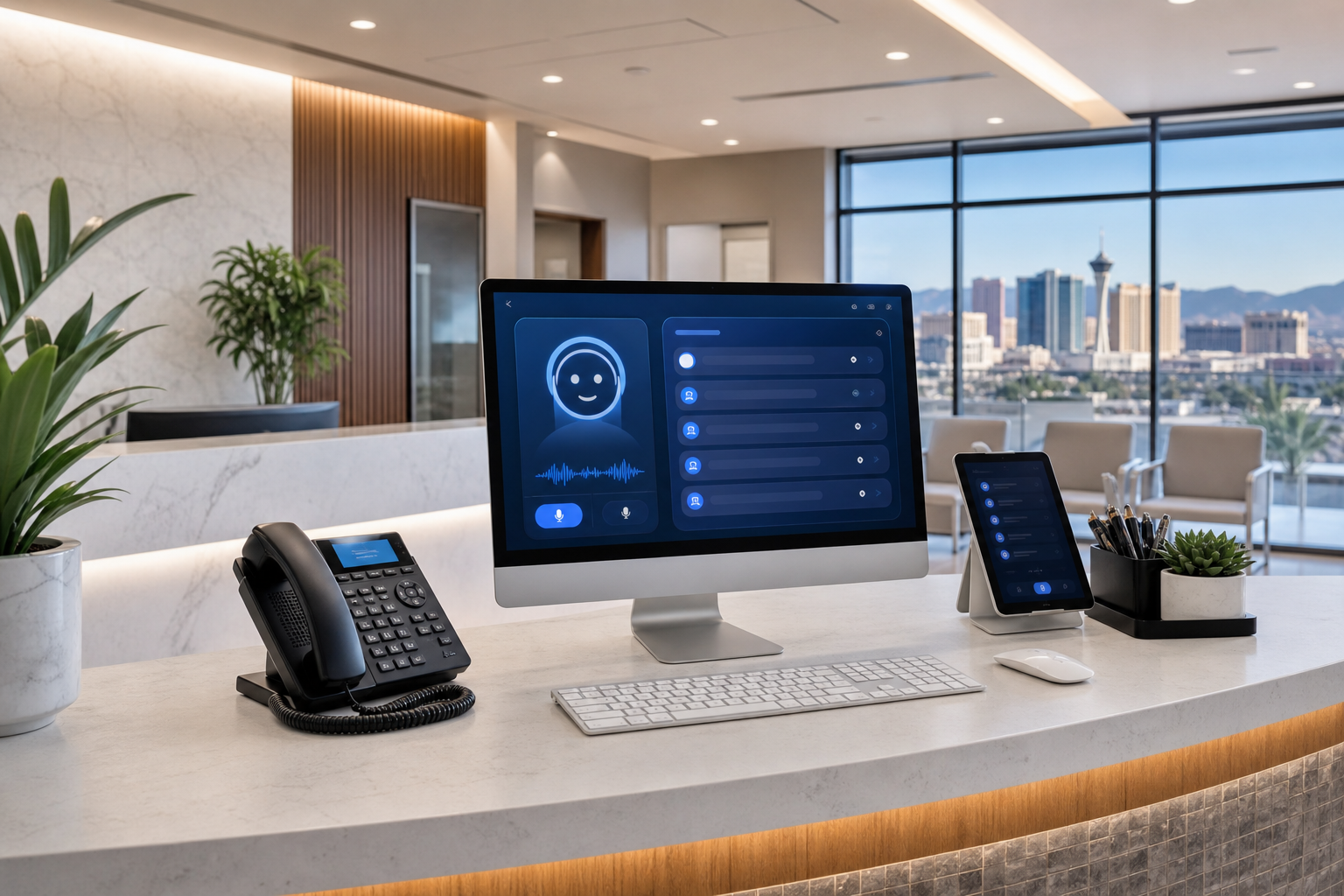
An AI receptionist for a medical office is a virtual assistant that answers calls, books appointments, handles patient questions, and routes messages using artificial intelligence. This technology helps busy offices save time, reduce missed calls, and improve patient experience without hiring extra staff.
Key takeaways
- AI receptionists handle calls, appointment booking, and FAQ 24/7 for medical, dental, and service offices.
- Small businesses benefit from fewer missed calls and lower staff workload.
- Patient privacy and data security are essential when choosing a healthcare AI solution.
- Setup is straightforward: choose features, connect to your phone, and train your AI on your business info.
- Get your free website AI audit to see if an AI receptionist fits your office needs.
What Is an AI Receptionist for Medical Offices?
An AI receptionist is a software-powered virtual assistant that answers your office phone, greets callers, books appointments, answers common questions, and takes messages using natural language and artificial intelligence. In a medical or dental setting, it can handle everything from new patient intake to confirming appointment times and relaying office policies.
For medical, dental, and service businesses, the AI receptionist works by integrating with your phone system, either replacing or assisting your human receptionist. Calls are answered instantly, and the AI listens for what the caller needs. If it's an appointment, the AI can check your calendar and suggest openings. If someone needs directions or wants to know your insurance policies, the AI gives accurate, pre-approved answers. For urgent matters, it can route calls to the right staff member or escalate based on your rules.
Typical features include call answering and routing to appropriate staff, appointment scheduling and calendar management, answering FAQs about insurance, hours, and location, message taking and forwarding, and multilingual support, depending on the solution.
The AI receptionist never needs breaks or calls in sick. For many small offices, it means patients always reach a helpful voice, even after hours. Sales Bott in Las Vegas, Nevada, offers these AI receptionist solutions to help medical and service businesses modernize their front desk without extra hiring.
What Are the Top Benefits of AI Receptionists for Healthcare and Service Businesses?
The main benefits of an AI receptionist for medical, dental, or service offices are around-the-clock availability, fewer missed calls, faster scheduling, privacy considerations, and potential cost savings.
With 24/7 coverage, your patients or clients can call any time, including during lunch breaks, after hours, or weekends. This means fewer lost opportunities and better service for those with unpredictable schedules. AI receptionists answer every call immediately, so you don’t lose patients to voicemail or busy signals.
Appointment scheduling is faster, too. Instead of waiting on hold, callers can instantly book, reschedule, or cancel appointments. This reduces the workload on your staff and improves your fill rate. For healthcare, privacy and data security are essential. Not every AI platform is certified for healthcare use, so always ask your provider how they handle protected health information before going live.
Cost savings come from reduced need for overtime, temp staff, or hiring additional receptionists. AI receptionists are typically billed as a monthly service and don’t require benefits or paid time off. This makes them especially attractive for small and medium offices trying to do more with less.
[Learn more about the benefits in our full guide to the AI receptionist for small business].
How Do Different Industries Use AI Receptionists? (Medical, Dental, Salons, HVAC, Contractors, Plumbers)
AI receptionists are now common in many industries, not just medical offices. Here’s how they work in real scenarios:
Medical offices use AI receptionists to answer patient calls, book appointments, remind patients of upcoming visits, and answer questions about insurance or office hours. After hours, the AI can handle emergency instructions and route urgent calls.
Dental offices often rely on AI to confirm appointments and follow up on missed visits, reducing no-shows. The best AI receptionist for dental office workflows can answer insurance questions and pre-screen new patients for basic info before handing off to staff.
Salons use AI receptionists for booking, rescheduling, and answering questions about services, hours, or pricing. Multilingual support is especially valuable for diverse neighborhoods.
For HVAC, contractors, and plumbers, AI receptionists handle after-hours emergency calls, log service requests, and route urgent issues to on-call staff. This ensures that urgent jobs are never missed and customers feel taken care of, even at night.
Each industry has unique needs. Some require emergency routing, others need detailed intake scripts or bilingual support. AI solutions can be tailored to handle these differences, improving both efficiency and customer satisfaction.
Checklist: Is an AI Receptionist Right for Your Office?
If you’re wondering whether an AI receptionist fits your business, use this checklist to decide and prepare:
Before setup, prepare a list of your most common questions, appointment types, and escalation rules. Decide what calls your AI should handle and what should go to a human. This upfront work means your AI receptionist will sound professional and helpful from day one.
Comparison Table: AI Receptionist vs. Traditional Receptionist
Here’s a side-by-side look at how AI receptionists and traditional human receptionists stack up for small medical, dental, and service offices:
AI receptionists excel at consistency, speed, and cost control, while traditional staff offer a personal touch for complex or sensitive calls. Small offices often combine both for best results.
How Do You Set Up an AI Receptionist in Your Medical or Dental Office?
Setting up an AI receptionist is a straightforward process that most small offices can complete in a short time. Here’s how it typically works:
First, choose the features you need: call answering, appointment booking, FAQ handling, or after-hours support. Next, connect the AI receptionist to your existing phone number or forward calls as needed. The setup team will work with you to gather information about your office, such as appointment types, business hours, and answers to common questions.
During onboarding, you’ll test the system to make sure it understands your callers and responds appropriately. You may need to review or edit the AI’s responses for accuracy and tone. Staff training is usually quick: explain to your team how the AI works, when it takes over, and how to handle calls the AI escalates to them.
Finally, let your patients or clients know about the new system. A simple message on your website or voicemail helps set expectations. If you want to see how this looks in practice, schedule a free demo or website AI audit with Sales Bott.
What Are Common Questions About AI Receptionists for Small Businesses?
Many small business owners ask about privacy, integration, and ongoing support. For privacy, it’s important to choose an AI receptionist that follows healthcare data security best practices. Not every solution is designed for healthcare, so ask your provider for documentation and only use AI for allowed tasks.
Integration with calendars and scheduling tools is common, but double-check that your AI receptionist can connect to your current systems. Some platforms allow direct booking into your calendar, while others send requests for manual confirmation.
Support is another concern. Quality AI receptionist providers offer training, updates, and troubleshooting as part of their service. Make sure you have a clear point of contact for any technical or operational questions.
If you want to go deeper on costs, read our AI receptionist cost breakdown, or see how AI can upgrade your website with the AI website upgrade service.
Ready to Modernize Your Front Desk? Get Your Free Website AI Audit
If you want to save time, answer more calls, and improve service in your medical, dental, or service office, an AI receptionist could be the solution. Sales Bott in Las Vegas, Nevada, helps small businesses modernize their websites and install AI receptionists tailored to your needs.
Get your free website AI audit to see how AI can improve your front desk, with no commitment required.
Frequently asked questions
See it on your own business
Book a free demo and we will train a test assistant on your business so you can talk to it.
Book a call